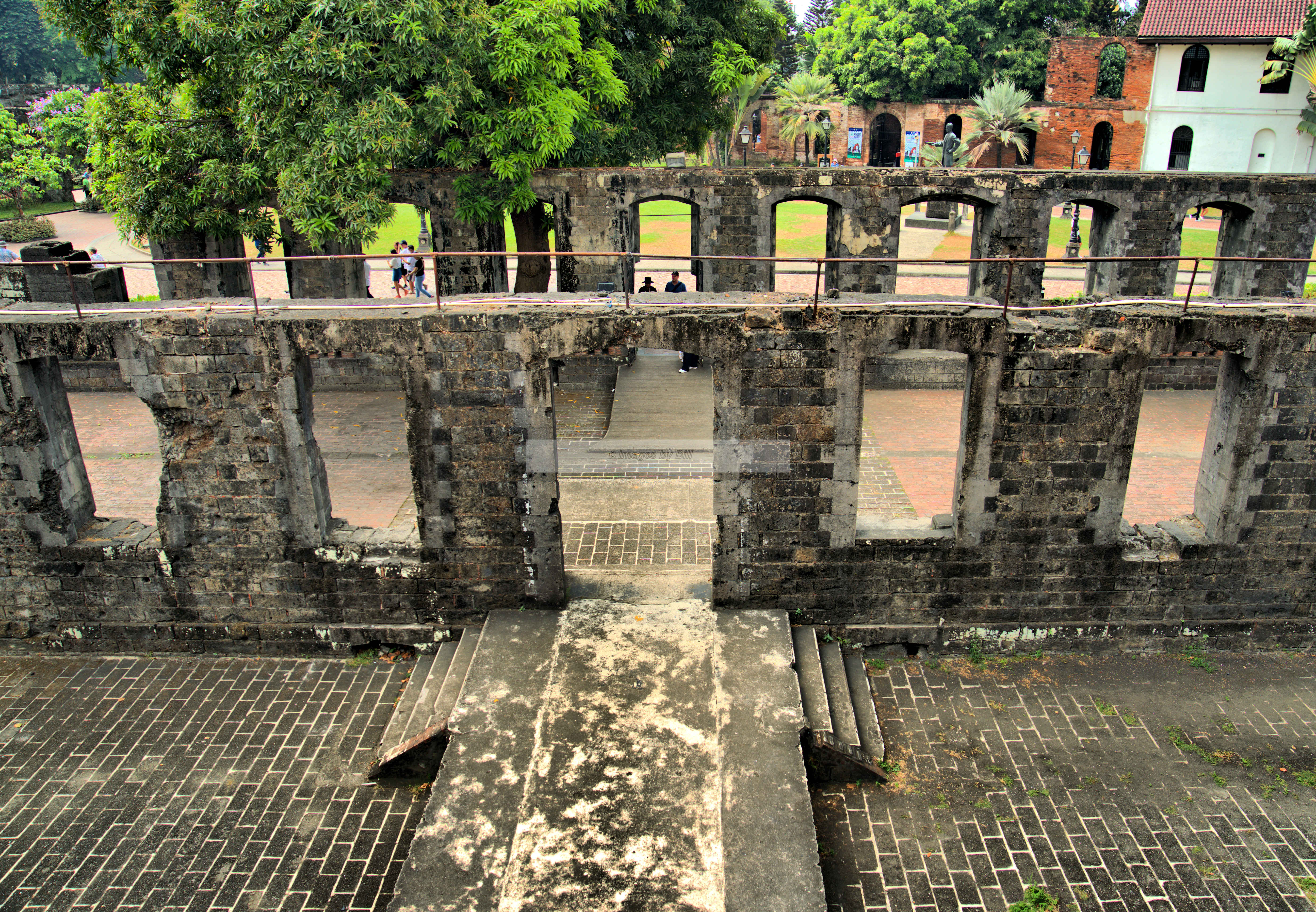
Fort Santiago is a historical landmark in the walled city section of Manila. Initially built by the Spanish in 1571, it has been occupied by the Spanish, the British, the United States, and, during WW2, the Japanese. American and Filipino forces heavily damaged it during the Battle of Manila in early 1945. The Fort also served as a prison throughout its history, and one of its notable detainees was Jose Rizal before his execution. In 1950, Fort Santiago was declared a “Shrine of Freedom” and is now home to open-air theatres, displays, and legacies of its history. The Fort is a popular tourist stop and an area for picnics and promenades.
A Request
The Japanese Imperial Army captured and occupied Fort Santiago during World War II. They used its dungeons and other buildings as a Prisoner of War camp for American and Filipino soldiers. Stories of suffocation, starvation, and other atrocities on the prisoners are well documented.
Off to the side of the primary dungeon is a circular dirt area featuring a simple white cross. Many people visiting ignored it or gave it a passing glance.
In 1945, following the liberation of Manila during the Second World War, the US Army discovered 600 decomposing corpses inside the Fort Santiago dungeons. The conditions were so cramped that all prisoners died from suffocation and heat exhaustion. The bodies were subsequently buried en masse at this site and marked by a white marble cross.
Before you move on to the other pictures, please stop and consider the cross for what it represents. It struck me very close to home because both my parents were in the Philippines Theater during World War II. Many bodies were American soldiers who died under terrible conditions, serving their country and fighting for what we hold dear. They deserve more than a passing glance or a walk-by. Thank you.


A walk around Fort Santiago


parade grounds, to the man entrance.


This is the second of three posts on our day in Manila.
Click here to view full-size, no watermark images at www.ImagesByBill.us
Click here to see all the Around-The-World 2024 images.
Manila, Philippines
03/17/24
(comments are welcome)
Want to see more?
(Like the post? Click Like below)


Leave a Reply